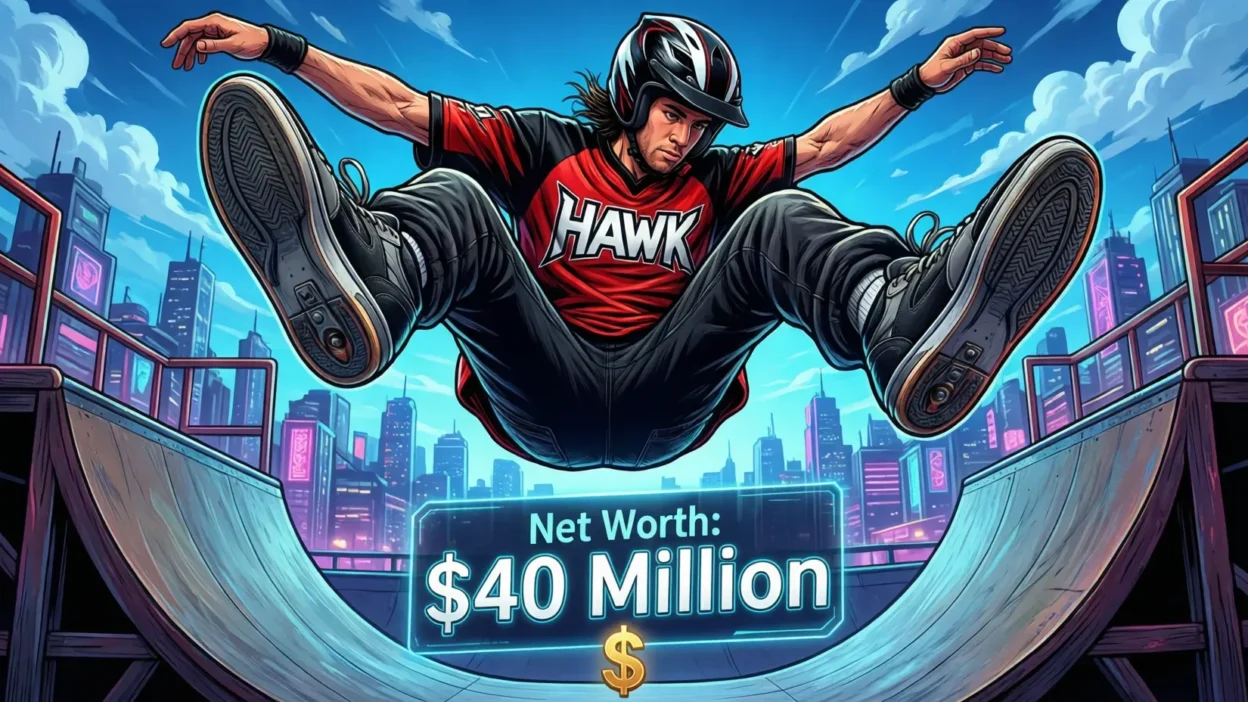
Tony Hawk is more than just a skateboarding legend he is one of the most successful entrepreneurs to ever emerge from extreme sports.
Widely credited with popularizing skateboarding around the world, Hawk transformed a niche sport into a global brand and built a financial empire that extends far beyond competitions and skate parks.
From landing the first ever televised 900 trick to creating one of the best selling video game franchises of all time, his career spans decades of influence and innovation.
Today, Tony Hawk’s net worth reflects not only his achievements as an athlete but also his sharp business instincts.
Through endorsements, licensing deals, business ventures, investments, and long term royalties, Hawk has created multiple income streams that continue to generate wealth even after stepping back from professional competition.
In this article, we’ll explore how Tony Hawk built his fortune, break down his major income sources, and examine the financial decisions that turned a skateboarder into a global icon.
Early Life and Background
Tony Hawk was born on May 12, 1968, in San Diego, California, and showed signs of exceptional talent at an early age. Known for his intense focus and hyperactive personality, Hawk struggled to fit into traditional academic and social environments. Skateboarding quickly became an outlet where he could channel his energy and creativity, and it didn’t take long for his talent to stand out. By the age of nine, he was already competing locally, and at just 12 years old, he earned his first official sponsorship.
At 14, Tony Hawk turned professional, becoming one of the youngest pro skateboarders in history. While skateboarding was still considered a fringe sport at the time, Hawk’s parents supported his passion, even when financial returns were uncertain. Early in his career, prize money was limited, and professional skateboarders often earned very modest incomes. Hawk has openly shared that during the early years, he sometimes struggled financially despite being one of the best in the world.
However, these formative years were critical in shaping Hawk’s future success. He developed not only technical mastery but also a deep understanding of the skateboarding culture and industry. This early exposure helped him recognize the long term potential of branding, endorsements, and intellectual property knowledge that would later play a key role in building Tony Hawk’s net worth. His early start, combined with persistence during a time when skateboarding lacked mainstream appeal, laid the foundation for both his legendary career and his financial empire.
Rise to Skateboarding Fame
Tony Hawk’s rise to skateboarding fame began in the 1980s, a period when the sport was still far from mainstream recognition. Despite limited media exposure and low prize money, Hawk dominated competitive skateboarding through pure skill and relentless innovation. He became a standout figure in vert skating, winning over 70 competitions by the end of the decade and establishing himself as one of the most technically advanced skateboarders in the world.
During the 1990s, Hawk’s influence grew as skateboarding slowly gained wider acceptance. He helped redefine what was possible on a skateboard by inventing or popularizing numerous aerial tricks that pushed the sport forward. His breakthrough moment came in 1999 at the X Games, when he successfully landed the first ever 900 in competition. The trick instantly became a cultural milestone and was replayed worldwide, turning Hawk into a household name overnight.
This surge in visibility dramatically changed Hawk’s earning potential. Sponsorships, endorsements, and media opportunities increased as brands recognized his marketability beyond the skateboarding community. Hawk wasn’t just a champion athlete he was becoming a symbol of skate culture itself. His growing fame also gave him leverage to negotiate better deals and explore business opportunities that aligned with his personal brand.
The rise to fame marked a turning point in Tony Hawk’s career. It transformed him from a successful professional skateboarder into a global sports icon, setting the stage for the business ventures, licensing deals, and long term income streams that would ultimately define Tony Hawk’s net worth.
Career Earnings from Skateboarding
During the early years of Tony Hawk’s professional career, skateboarding competitions offered relatively modest prize money compared to traditional sports. Even as one of the top competitors in the world, Hawk’s earnings from events alone were limited, especially throughout the 1980s when the sport lacked major sponsors and media coverage. However, his consistent dominance allowed him to secure sponsorship deals that provided a more stable income.
As skateboarding gained popularity in the 1990s, Hawk’s competition earnings increased alongside sponsorship payouts. He won multiple national and international events, including numerous X Games medals, which boosted both his reputation and financial value. While prize money never became his primary source of wealth, it played an important role in establishing credibility and visibility that later fueled larger opportunities.
More importantly, Hawk understood early on that competitive success could be leveraged into long term financial growth. Rather than relying solely on event winnings, he used his elite status to attract endorsement deals and licensing opportunities. This strategy allowed him to earn far more than many of his peers, who depended heavily on short term competition income.
By the late 1990s, Hawk began transitioning away from relying on skateboarding competitions as his main revenue stream. Instead, competitive skating became a platform that supported his expanding business interests. His career earnings from skateboarding laid the groundwork for future wealth, but it was his ability to convert athletic success into brand value that truly set him apart. This shift in mindset was a crucial factor in the sustained growth of Tony Hawk’s net worth and long term financial stability.
Tony Hawk’s Pro Skater Video Game Franchise
The release of Tony Hawk’s Pro Skater in 1999 marked a turning point not only in Tony Hawk’s career but also in the intersection of sports and gaming. At a time when skateboarding was surging in popularity, the video game introduced the culture of skating to a global audience that extended far beyond skate parks. The franchise quickly became one of the most successful sports video game series in history, selling millions of copies worldwide.
Unlike many athlete branded games, Tony Hawk’s role went beyond name licensing. He was actively involved in the creative direction and received long term royalty payments from the franchise. These royalties proved to be far more lucrative than competition prize money, generating consistent income for years. Each new release, remake, or remastered edition continued to add to his earnings long after he stepped back from professional competition.
The success of the game series also elevated Hawk’s brand value across multiple industries. It opened doors to new endorsement deals, media appearances, and licensing opportunities, further expanding his income streams. Even during periods when skateboarding’s mainstream popularity declined, the video games helped keep his name relevant and financially strong.
For many analysts, the Tony Hawk’s Pro Skater franchise is considered the single largest contributor to Tony Hawk’s net worth. It demonstrated the power of intellectual property ownership and long term royalties, solidifying Hawk’s reputation not just as a legendary skateboarder, but as a savvy entrepreneur who understood how to monetize his influence on a global scale.
Endorsements and Sponsorship Deals
As Tony Hawk’s fame grew beyond the skateboarding community, endorsement and sponsorship deals became a major pillar of his income. Unlike many athletes who rely on short term contracts, Hawk built long standing relationships with brands that aligned closely with skate culture and youth markets. Early partnerships with companies such as Vans, Powell Peralta, and other skate focused brands helped establish his credibility while providing steady financial support.
Following his mainstream breakthrough in the late 1990s, larger global brands began to recognize Hawk’s marketability. These endorsement deals expanded into footwear, apparel, sports equipment, and lifestyle marketing campaigns. His image as an authentic athlete rather than a manufactured celebrity made him particularly attractive to brands looking to connect with younger audiences. As a result, Hawk was often able to negotiate favorable terms, including licensing agreements and royalty based compensation rather than one time payments.
Endorsements also played a strategic role in strengthening Tony Hawk’s overall brand. Each partnership increased his visibility, reinforced his influence, and created cross promotional opportunities with his businesses and video game franchise. This approach helped him maintain relevance even as competitive skateboarding evolved and newer athletes entered the scene.
Over time, Hawk became selective about the brands he endorsed, focusing on long term value rather than quick financial gains. This careful approach ensured consistent income while protecting his personal brand. Today, endorsement deals remain an important component of Tony Hawk’s net worth, contributing to both active income and residual earnings from long running partnerships that continue to generate value years after their initial launch.
Business Ventures and Entrepreneurship
Tony Hawk’s success extends far beyond skateboarding, largely due to his ability to think like an entrepreneur. Recognizing that an athletic career has a limited lifespan, Hawk focused early on building businesses that could generate long term income. One of his most notable ventures is Birdhouse Skateboards, a company he co founded in the early 1990s. Birdhouse quickly became a respected brand within the skateboarding industry, producing decks, apparel, and accessories that appealed to both professional and amateur skaters.
In addition to Birdhouse, Hawk expanded into clothing, merchandise, and licensing deals that capitalized on his name and image. Rather than simply selling products, he built scalable brands that could operate independently of his day to day involvement. This approach allowed him to earn passive income while maintaining creative control over how his brand was represented.
Hawk has also been involved in skatepark development and consulting, helping design and promote public skate facilities around the world. These projects not only generated revenue but also reinforced his influence within the skateboarding community. By reinvesting in the sport, he strengthened both his legacy and brand loyalty.
What sets Hawk apart from many athletes is his understanding of intellectual property and ownership. He consistently prioritized equity and long term returns over short term payouts. This business first mindset played a crucial role in sustaining and growing Tony Hawk’s net worth well beyond his competitive years. Through smart entrepreneurship and strategic partnerships, Hawk successfully transitioned from sports icon to business leader, ensuring financial stability that continues to this day.
Media, Television, and Film Appearances
As Tony Hawk’s popularity reached mainstream audiences, opportunities in media, television, and film became another important source of income. His recognizable image and reputation as the face of skateboarding made him a frequent guest on talk shows, sports programs, and reality television. These appearances not only generated direct earnings but also helped expand his reach beyond the skateboarding community.
Hawk has appeared in numerous films and television series, often playing himself or making cameo appearances that reinforced his status as a cultural icon. He has also worked as a host, commentator, and producer on skateboarding related programs, allowing him to remain closely connected to the sport while monetizing his expertise. Voice acting roles in animated shows and video games further diversified his media income.
In addition to traditional entertainment, Hawk embraced digital media early. He leveraged documentaries, online content, and social platforms to maintain relevance in an evolving media landscape. This adaptability helped him stay visible to younger audiences while opening new monetization channels through sponsorships and branded content.
While media work may not rival the earnings from his video game franchise, it plays a strategic role in sustaining Tony Hawk’s brand value. Each appearance reinforces his legacy, keeps his name in the public eye, and supports his other ventures. Over time, these combined efforts have contributed steadily to Tony Hawk’s net worth, proving that consistent media presence can be just as valuable as competition winnings in building long term financial success.
Investments and Assets
As his income grew, Tony Hawk focused on building long term wealth through strategic investments and asset acquisition. Like many high profile athletes, he diversified his earnings to reduce reliance on any single income stream. One of his most significant investment areas has been real estate. Over the years, Hawk has bought and sold multiple properties, including luxury homes in California, often benefiting from appreciation in high value markets.
Beyond real estate, Hawk has invested in various business ventures, particularly those connected to sports, media, and youth culture. His deep understanding of branding and consumer trends allowed him to identify opportunities that aligned with his personal image. While many of these investments remain private, they contribute to the overall stability and growth of his financial portfolio.
Hawk has also shown interest in startups and innovative projects, especially those connected to digital media and lifestyle brands. Rather than pursuing speculative investments, he tends to favor businesses with long term growth potential and cultural relevance. This disciplined approach reflects his broader financial philosophy of sustainability over short term gains.
Assets such as intellectual property rights, licensing agreements, and ongoing royalties form a substantial portion of Tony Hawk’s wealth. These intangible assets continue to generate income without requiring active involvement, making them especially valuable post retirement. Combined with physical assets like real estate, Hawk’s investment strategy has helped preserve and grow his net worth. His approach highlights the importance of diversification, patience, and strategic planning in maintaining financial success long after an athletic career ends.
Philanthropy and the Tony Hawk Foundation
Philanthropy plays an important role in Tony Hawk’s legacy, reflecting his long standing commitment to giving back to the skateboarding community. In 2002, he founded the Tony Hawk Foundation with the goal of supporting underserved youth through the development of public skateparks. The foundation focuses on providing grants to communities that lack access to safe, inclusive recreational spaces, particularly in low income and underserved areas.
Rather than focusing solely on donations, the foundation emphasizes long term community impact. By helping fund public skateparks, Hawk has contributed to creating positive environments where young people can develop skills, confidence, and a sense of belonging. These projects often involve local governments and community organizations, ensuring sustainability beyond the initial funding.
Hawk has personally contributed millions of dollars to the foundation and remains actively involved in its mission. While philanthropy is not a direct driver of Tony Hawk’s net worth, it strengthens his public image and reinforces the authenticity of his brand. This credibility indirectly supports his business ventures and partnerships by aligning his financial success with meaningful social impact.
The foundation also highlights Hawk’s belief that skateboarding is more than a sport it is a tool for empowerment and community building. His charitable efforts have helped expand access to skateboarding worldwide, leaving a lasting impact that extends far beyond financial metrics. In this way, philanthropy has become an integral part of Tony Hawk’s overall legacy, complementing his wealth with purpose and positive influence.
Tony Hawk Net Worth Breakdown
Tony Hawk’s net worth is the result of decades of strategic decision making, brand building, and income diversification. Unlike many athletes who rely heavily on salaries or prize money, Hawk created a financial model that combines active earnings with long term passive income. His wealth is not tied to a single source but spread across multiple revenue streams that continue to perform even years after his competitive peak.
A significant portion of his net worth comes from the Tony Hawk’s Pro Skater video game franchise. Royalties from game sales, remastered editions, and licensing deals have generated consistent income over time. Business ventures such as Birdhouse Skateboards and branded merchandise also contribute steadily, supported by licensing agreements that require minimal ongoing involvement.
Endorsements and sponsorships make up another key segment of his wealth. Long term partnerships, rather than short term promotional deals, have provided recurring revenue while protecting his personal brand. Media appearances, production work, and digital content add supplementary income that reinforces his visibility and influence.
Investments and assets further strengthen Tony Hawk’s financial position. Real estate holdings, intellectual property rights, and private investments help preserve and grow his wealth. Together, these elements form a balanced portfolio designed for longevity.
Overall, Tony Hawk’s net worth reflects more than financial success it represents ownership, foresight, and adaptability. His ability to monetize talent while maintaining authenticity has allowed him to build a sustainable empire that continues to generate value well into retirement.
Net Worth Growth Over the Years
Tony Hawk’s net worth has grown steadily over several decades, shaped by key milestones in both his athletic and business careers. In the early years of his professional life, his earnings were relatively modest despite his dominance in competitions. Skateboarding was still a developing sport, and financial opportunities were limited primarily to sponsorships and small prize winnings.
The late 1990s marked a major turning point. The rise of the X Games and the launch of Tony Hawk’s Pro Skater dramatically increased Hawk’s income and global visibility. During this period, his net worth experienced rapid growth as video game royalties, endorsement deals, and media opportunities expanded simultaneously. This era is often considered the peak of his active income generation.
In the 2000s and beyond, Hawk transitioned from high intensity competition to long term wealth preservation and growth. Rather than declining, his income stabilized through royalties, licensing agreements, and business ventures that required less physical involvement. Remastered video games, brand collaborations, and ongoing investments continued to add to his wealth.
What makes Hawk’s financial journey unique is its sustainability. Even after stepping back from professional skating, his net worth has remained resilient due to diversified income streams and passive earnings. This long term growth highlights the effectiveness of his strategy: leveraging peak fame to build assets that deliver value for decades. Tony Hawk’s financial evolution serves as a model for athletes seeking stability beyond their competitive years.
Comparison with Other Athletes and Skateboarders
When comparing Tony Hawk’s net worth to other professional skateboarders, his financial success stands in a category of its own. While many elite skaters have earned impressive incomes through sponsorships and competitions, few have managed to build long term wealth at Hawk’s scale. This difference is largely due to his early adoption of branding, licensing, and intellectual property ownership.
Compared to skateboarders who relied primarily on prize money and short term endorsements, Hawk diversified his income at a much earlier stage. His video game franchise alone generated revenue streams that most athletes never access. As a result, Hawk consistently ranks among the richest skateboarders in the world, often surpassing peers who achieved similar competitive success.
When viewed alongside athletes from mainstream sports such as basketball or football, Tony Hawk’s net worth may appear modest by comparison. However, this perspective overlooks the economic reality of skateboarding as a sport. Hawk built his fortune without league salaries, guaranteed contracts, or massive broadcasting deals. Instead, he created value through entrepreneurship and ownership.
This comparison highlights why Tony Hawk’s financial story is so widely respected. He proved that athletes from non traditional sports can achieve lasting wealth by thinking beyond competition. His success has set a benchmark for action sports athletes, influencing how future generations approach career planning, branding, and financial independence.
Lifestyle and Spending Habits
Despite his substantial net worth, Tony Hawk is known for maintaining a relatively balanced and grounded lifestyle. Unlike many high profile athletes who display excessive luxury, Hawk has often emphasized comfort, family, and personal interests over extravagant spending. His lifestyle choices reflect a long term financial mindset focused on sustainability rather than status.
Hawk has owned several high value properties over the years, particularly in California, where real estate represents both a lifestyle choice and a smart investment. These homes often include custom skate facilities, blending personal passion with property value. While he enjoys the benefits of financial success, there is little evidence of extreme indulgence in luxury cars or lavish collections.
A significant portion of Hawk’s spending goes toward reinvestment both in business ventures and community projects. His involvement in skatepark development and youth initiatives demonstrates a preference for purpose driven spending. This approach not only aligns with his values but also strengthens his public image and brand credibility.
Hawk’s lifestyle also reflects financial discipline. By avoiding unnecessary excess and prioritizing long term assets, he has preserved his wealth across multiple decades. This measured approach contrasts sharply with the financial struggles faced by many former athletes. Ultimately, Tony Hawk’s spending habits reinforce the principles that helped build his net worth: thoughtful decision making, reinvestment, and a focus on lasting value over short term luxury.
Challenges, Setbacks, and Reinvention
Like many athletes whose careers span multiple decades, Tony Hawk faced significant challenges along the way. During the late 1980s and early 1990s, skateboarding experienced a major decline in popularity. Sponsorships dried up, competitions disappeared, and many professional skaters struggled financially. Even as one of the sport’s top performers, Hawk felt the effects of this downturn and had to adapt to survive.
Injuries also presented ongoing obstacles. Skateboarding is physically demanding, and Hawk endured numerous injuries throughout his career. These setbacks limited his ability to compete consistently and reinforced the reality that an athletic career is inherently temporary. Rather than viewing these challenges as setbacks alone, Hawk used them as motivation to expand beyond competition.
Reinvention became a defining theme of his success. Hawk shifted focus toward business ventures, branding, and intellectual property ownership just as skateboarding began to regain mainstream attention. The launch of his video game franchise and increased media exposure allowed him to capitalize on renewed interest in the sport without relying solely on physical performance.
These challenges ultimately strengthened Hawk’s financial position. By adapting early and embracing change, he avoided the common pitfalls that derail many athletes after retirement. His ability to evolve with the industry ensured that his income remained resilient during market fluctuations. Tony Hawk’s journey demonstrates how strategic reinvention, driven by foresight and adaptability, can turn obstacles into opportunities and sustain long term financial success.
(FAQ)
What is Tony Hawk’s net worth?
Tony Hawk’s net worth is estimated to be in the tens of millions of dollars, built through a combination of skateboarding, business ventures, endorsements, investments, and long term royalties. His wealth has remained stable due to diversified income streams rather than reliance on competition earnings alone.
What is Tony Hawk’s biggest source of income?
The Tony Hawk’s Pro Skater video game franchise is widely considered his largest and most consistent income source. Royalties from game sales, remasters, and licensing deals have generated revenue for more than two decades.
Did Tony Hawk make most of his money from skateboarding competitions?
No. While competitions helped establish his reputation, prize money made up only a small portion of his total earnings. Most of Tony Hawk’s wealth comes from business ventures, endorsements, and intellectual property ownership.
Is Tony Hawk still making money today?
Yes. Tony Hawk continues to earn through royalties, investments, licensing deals, brand collaborations, and media appearances. His income today is largely passive, requiring minimal direct involvement.
How did Tony Hawk become so financially successful compared to other skateboarders?
Tony Hawk focused early on branding, ownership, and long term strategy. By diversifying income streams and prioritizing equity over short term payouts, he built sustainable wealth that outpaced most athletes in the sport.
This FAQ section strengthens topical authority, improves search visibility, and directly answers high intent user queries related to Tony Hawk’s net worth.
Conclusion
Tony Hawk’s net worth is the result of a rare combination of talent, timing, and strategic foresight.
While his skateboarding achievements made him a global icon, it was his ability to think beyond competition that transformed his success into lasting wealth.
By recognizing early that athletic careers are short, Hawk focused on building ownership driven income streams that would endure long after he stepped away from professional skating.
From the groundbreaking Tony Hawk’s Pro Skater video game franchise to carefully chosen endorsements, business ventures, and investments, Hawk consistently prioritized long term value over short term gains.
His approach allowed him to remain financially relevant even as trends in skateboarding and entertainment shifted. Unlike many athletes who struggle after retirement, Hawk’s diversified portfolio ensured stability and continued growth.
Equally important is the way Hawk aligned financial success with personal values. Through philanthropy and community focused initiatives, he reinvested his wealth into skateboarding’s future, strengthening both his legacy and brand credibility.
This balance between profit and purpose has made his financial story not only impressive but also widely respected.
Ultimately, Tony Hawk’s journey offers valuable lessons for athletes, entrepreneurs, and creators alike.
His net worth represents more than a number it reflects smart decision making, adaptability, and a commitment to building something that lasts. Tony Hawk didn’t just change skateboarding; he redefined what long term success in action sports can look like.