
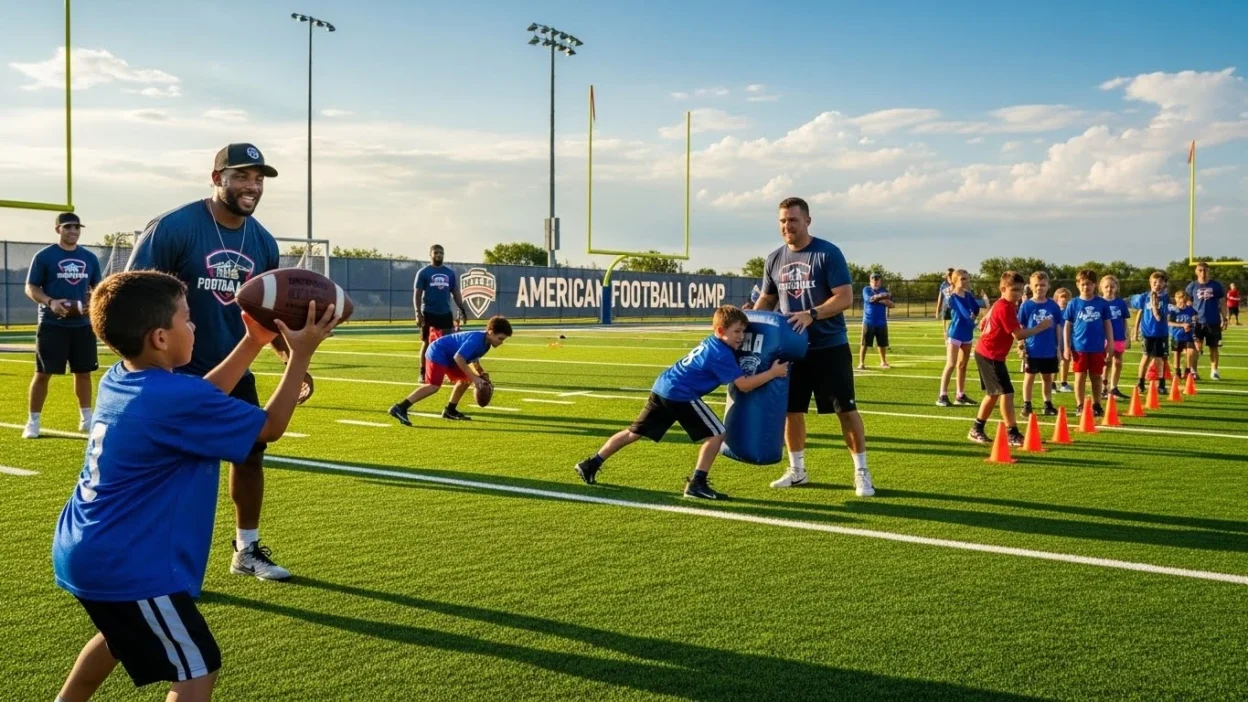
American football is one of the most popular sports in the United States. Many kids love to play it and dream of becoming great players one day. American football camps for kids are a fun and exciting way for children to learn the game. These camps help kids develop skills, make friends, and enjoy being active. Whether your child is a beginner or already plays football, attending a camp can be a wonderful experience. Kids can learn from experienced coaches in a safe and friendly environment while having a lot of fun.
1. What Are American Football Camps for Kids?
American football camps are programs designed specifically for children who want to learn or improve their football skills. These camps usually last a few days to a few weeks. They include training, practice sessions, and sometimes small games.
At these camps, kids learn basic football skills like throwing, catching, running, and blocking. They also learn about teamwork, discipline, and sportsmanship. Coaches use fun drills and exercises to make learning exciting. Camps can be held during summer, winter, or school holidays, making it easy for kids to attend.
Most camps welcome kids of all skill levels. Beginners can learn the basics, while more advanced players can focus on improving their performance. Many camps also provide equipment like footballs, cones, and jerseys, so kids do not need to bring everything themselves.
2. Benefits of Attending Football Camps
Attending a football camp can be very helpful for kids. Here are some of the main benefits:
- Learn Football Skills: Camps teach kids how to throw, catch, tackle safely, and understand the rules of the game.
- Stay Active and Healthy: Playing football keeps kids moving, which is good for their body and fitness.
- Make New Friends: Camps bring together kids with the same interest. They can meet new friends and work as a team.
- Build Confidence: Learning new skills and performing well helps kids feel proud of themselves.
- Develop Teamwork: Football is a team sport. Kids learn to cooperate, communicate, and support each other.
- Have Fun: The main goal of these camps is to make football exciting and enjoyable.
These benefits are not only helpful for football but also for other parts of life, like school, family, and social activities.
3. Types of Football Camps
There are different types of football camps, depending on your child’s needs and skill level. Some popular types include:
3.1 Skills Camps
Skills camps focus on teaching specific football skills. Kids can improve in areas like passing, catching, running, or defensive techniques. These camps often use drills and practice games to make learning effective.
3.2 Team Camps
Team camps are designed for children who want to play together as a team. These camps focus on strategy, teamwork, and game simulations. Kids learn how to work together and develop a sense of cooperation.
3.3 Specialty Camps
Some camps focus on specific positions or skills. For example, there are camps for quarterbacks, wide receivers, linemen, or kickers. Kids who want to specialize can join these camps to get focused training.
3.4 Overnight Camps
Overnight camps last several days and include staying at the camp facility. Kids get full immersion in football training and activities. These camps are great for building independence, friendships, and teamwork.
3.5 Local or Day Camps
Day camps are shorter programs where kids attend for a few hours each day. These camps are convenient for families who prefer kids to return home at the end of the day.
4. How to Choose the Right Football Camp
Choosing the right camp is important to ensure a positive experience. Here are some tips to help parents select the best option:
- Check the Age Group: Make sure the camp is suitable for your child’s age. Some camps are for younger kids, while others are for teenagers.
- Skill Level: Choose a camp that matches your child’s ability. Beginners should start with basic skills camps.
- Safety Measures: Check if the camp has proper safety equipment, trained coaches, and first aid support. Safety is very important in football.
- Coach Experience: Experienced coaches can teach better and make training fun. Look for camps with qualified coaches.
- Camp Schedule: Make sure the camp schedule fits your family’s routine. Check the duration, start and end times, and location.
- Cost: Compare the cost of different camps and what is included. Some camps include meals, equipment, or souvenirs.
- Reviews and Reputation: Read reviews from other parents or check the camp’s reputation online. Positive feedback usually means a good experience.
5. Tips for Kids Attending Football Camps
Here are some useful tips for kids to get the most out of their football camp experience:
- Wear Comfortable Clothing: Use sportswear and proper shoes for running and playing football.
- Bring Water: Staying hydrated is very important, especially during summer camps.
- Listen to Coaches: Coaches have a lot of knowledge. Following instructions helps you improve faster.
- Be Friendly: Make friends, work as a team, and help others. Teamwork is key in football.
- Practice at Home: Practicing simple drills at home can help you perform better at camp.
- Have Fun: Enjoy every moment, even if you make mistakes. Mistakes are part of learning.
- Eat Healthy: Eating a balanced diet helps kids stay active and energized during camp.
By following these tips, kids can enjoy the camp and improve their skills effectively.
6. Famous Football Camps in the USA
The United States has many well-known football camps for kids. Some of the most popular ones include:
- IMG Academy (Florida): One of the top sports academies, offering football programs for beginners and advanced players.
- Nike Football Camps: Camps held in different states, known for professional coaching and skill development.
- US Sports Camps: Offers youth football programs across the country with trained coaches and structured training.
- Local Community Camps: Many schools and local sports centers offer affordable football camps during holidays.
These camps provide a mix of fun, learning, and safety, making them suitable for children of all skill levels.
7. Safety in Football Camps
Safety is a major concern in football because it is a contact sport. Good football camps follow safety rules strictly:
- Proper helmets, pads, and protective gear are provided.
- Coaches teach kids how to tackle and block safely.
- First aid staff are available in case of injury.
- Drills are designed to prevent accidents and reduce risk.
- Kids are monitored for fatigue, heat, and dehydration.
Parents should always ask about the camp’s safety policies before enrolling their child.
8. Cost of Football Camps
The cost of football camps varies depending on the type, duration, and location.
- Local Day Camps: Usually cost $50–$200 for a week.
- Specialty or Skills Camps: Can range from $200–$500.
- Overnight Camps: These camps are more expensive, ranging from $500–$2,000 or more.
Many camps offer discounts for early registration or multiple children. Some local camps also provide scholarships or financial aid for families.
9. Preparing Your Child for Football Camp
Parents can help their child prepare for camp with some simple steps:
- Make sure your child has all the necessary sportswear and gear.
- Encourage your child to practice basic skills at home.
- Talk about the importance of teamwork and following rules.
- Prepare healthy meals and snacks for energy.
- Teach your child to stay hydrated and take breaks when needed.
Being prepared helps kids feel confident and ready to enjoy the camp experience.
10. Final Thoughts
American football camps for kids are a great way for children to learn, stay active, and have fun. Camps offer skill development, teamwork, and confidence-building opportunities. Parents should carefully choose a camp that matches their child’s age, skill level, and safety needs. By following tips for preparation and participation, kids can enjoy a safe and exciting experience.
Football camps can be the start of a lifelong love for the sport. Whether a child dreams of playing professionally or just wants to have fun, camps provide the perfect environment to learn, grow, and make lasting memories.


